Menu

Menu

Menu

Rare Seeds

Rare Seeds

Rare Seeds

IOS Mobile App for Urban Gardeners

IOS Mobile App for Urban Gardeners

IOS Mobile App for Urban Gardeners

(Role)

(Role)

(Role)

UX/UI Designer,

UX/UI Designer,

UX/UI Designer,

(Tools)

(Tools)

(Tools)

Figma, Figjam, Illustrator

Figma, Figjam, Illustrator

Figma, Figjam, Illustrator

(Duration)

(Duration)

(Duration)

3 weeks

3 weeks

3 weeks

The Challenge

The Challenge

The Challenge

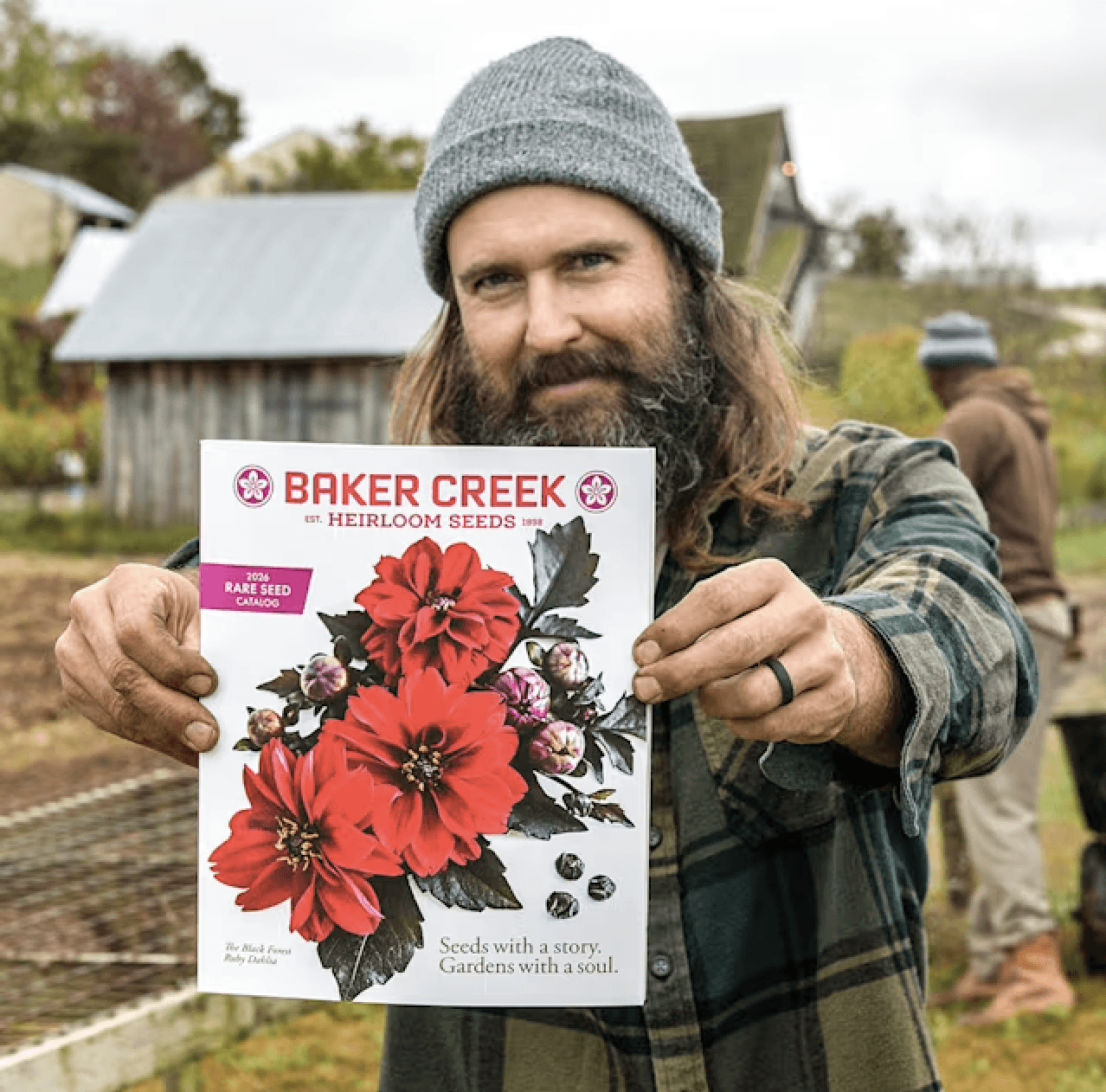
Rare Seeds, a mission-driven company dedicated to preserving heirloom seed diversity, tasked our team with designing a mobile app to complement their existing online catalog. Through research, we discovered an untapped growth opportunity: urban gardeners.

Urban gardeners face unique challenges that Rare Seeds' catalog-only model didn't address: limited space, difficulty finding seeds suited to urban microclimates, lack of beginner-friendly guidance on heirloom varieties, and limited access to local seed-swapping communities.
The Opportunity

The Opportunity

The Opportunity

Create a mobile app for Rare Seeds that serves a clear user need while supporting their mission to preserve heirloom seed diversity. We identified urban gardeners as the target audience and focused on solving their specific pain points in a way that felt helpful rather than transactional.

Strategic Solutions

Strategic Solutions

Strategic Solutions

User Research: Understanding Urban Gardeners

User Research: Understanding Urban Gardeners

User Research: Understanding Urban Gardeners

I led user research efforts, conducting 6 in-depth interviews with urban gardeners of varying experience levels. Through affinity mapping, we identified three core themes that would guide our design strategy.

01.

Search and Discovery

"I understand that heirlooms have unique qualities but may lack resilience in new regions. I wish I knew quickly what would work in my region."


Users needed intelligent filtering for urban microclimates, growing zones, and space constraints, not generic seed catalogs.

02.

Community Connection

"I'd like networking with people in the same zone. Successes and failures. 'We tried this and had trouble but here's what we did to make it work.'"


Urban gardeners craved localized community support but found traditional seed swaps inaccessible or intimidating.

03.

Guidance and Education

"I think guidance is essential to the planning of an urban garden. Growing difficulty always goes back to disease issues and zones."

Beginners needed personalized, actionable guidance rather than overwhelming encyclopedic resources. They wanted to know: "Will this work for me, right now, in my space?"

Concept and Strategy

Concept and Strategy

With a clear understanding of urban gardeners' needs, we shifted focus to defining the product concept.

Early team discussions focused on addressing every user pain point, which risked creating yet another generic gardening app that lacked focus.

I advocated for a different approach: make seed sharing the primary function, with Rare Seeds' shop as a secondary feature. This positioned Rare Seeds as a facilitator of community and sustainable practices, not just another e-commerce site.

To validate this direction, I researched demographics. Metro areas have significantly higher concentrations of 18-34 year olds, a demographic highly engaged with gamified experiences. If we could tap into that behavioral pattern, we could create sustained engagement.

With a clear understanding of urban gardeners' needs, we shifted focus to defining the product concept.

Early team discussions focused on addressing every user pain point, which risked creating yet another generic gardening app that lacked focus.

I advocated for a different approach: make seed sharing the primary function, with Rare Seeds' shop as a secondary feature. This positioned Rare Seeds as a facilitator of community and sustainable practices, not just another e-commerce site.

To validate this direction, I researched demographics. Metro areas have significantly higher concentrations of 18-34 year olds, a demographic highly engaged with gamified experiences. If we could tap into that behavioral pattern, we could create sustained engagement.

Aligning the team

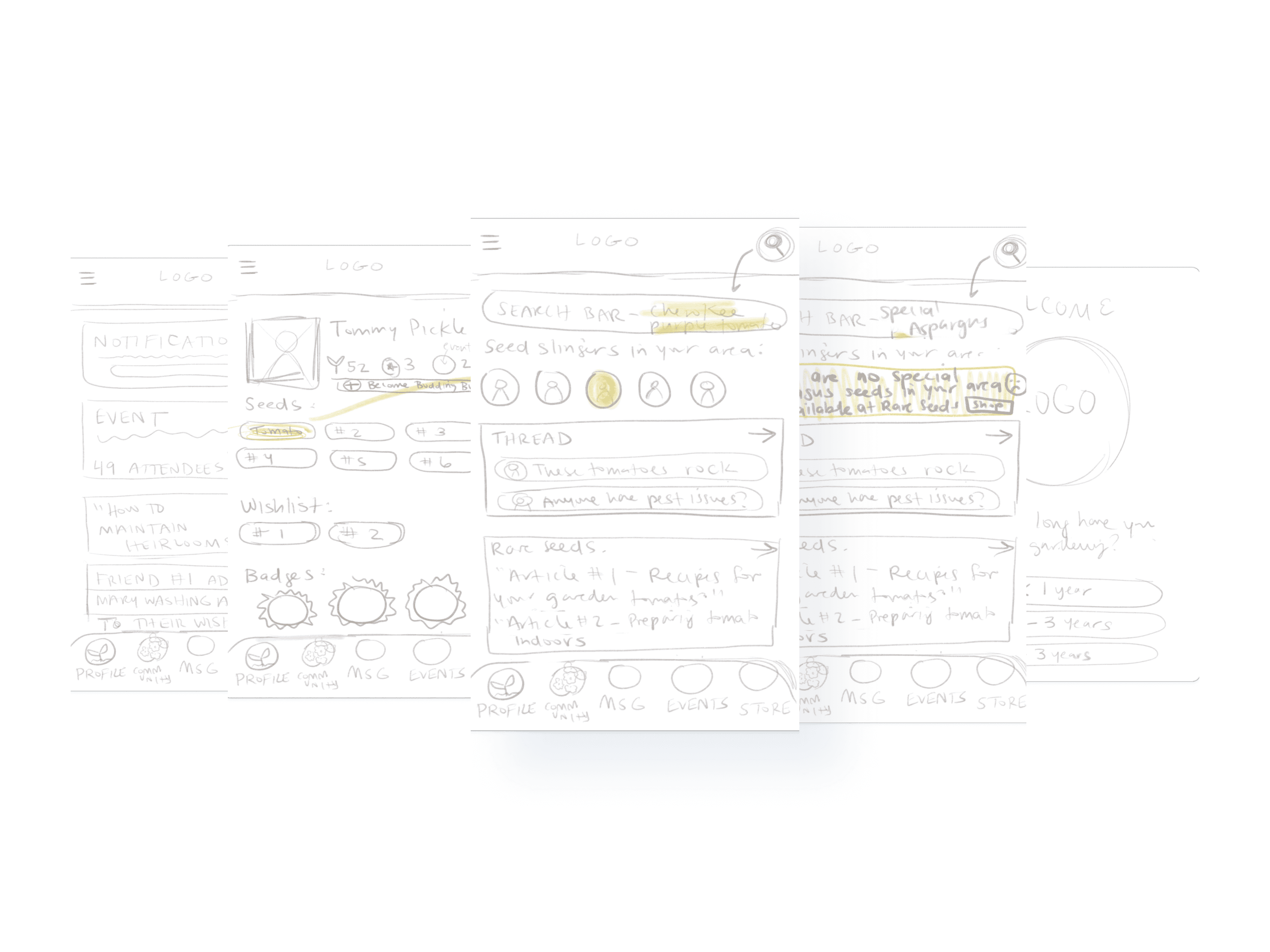
To bring the team together around this vision, I proposed a design studio session where each member would sketch wireframes exploring different approaches. This gave us a shared visual language to evaluate ideas. I also proposed a MoSCoW framework (Must Have, Should Have, Could Have, Won't Have) to prioritize features ruthlessly.

To bring the team together around this vision, I proposed a design studio session where each member would sketch wireframes exploring different approaches. This gave us a shared visual language to evaluate ideas. I also proposed a MoSCoW framework (Must Have, Should Have, Could Have, Won't Have) to prioritize features ruthlessly.

Key Design Decisions

Key Design Decisions

Key Design Decisions

Sowing the Seeds

  • Primary Function: Localized seed-sharing network connecting urban gardeners in the same growing zones


  • Secondary Function: Direct link to Rare Seeds' catalog when local seeds aren't available


  • Gamification Layer: Badge system and progress tracking to encourage seed swapping and community participation


  • Personalization: Onboarding that collects growing zone and experience level to curate relevant seed recommendations


This structure meant users would first look locally for seeds, building community connections. Only when local options were exhausted would they purchase from Rare Seeds.
Design

Design

Design

Designing for Usability and Brand Continuity

Designing for Usability and Brand Continuity

Designing for Usability and Brand Continuity

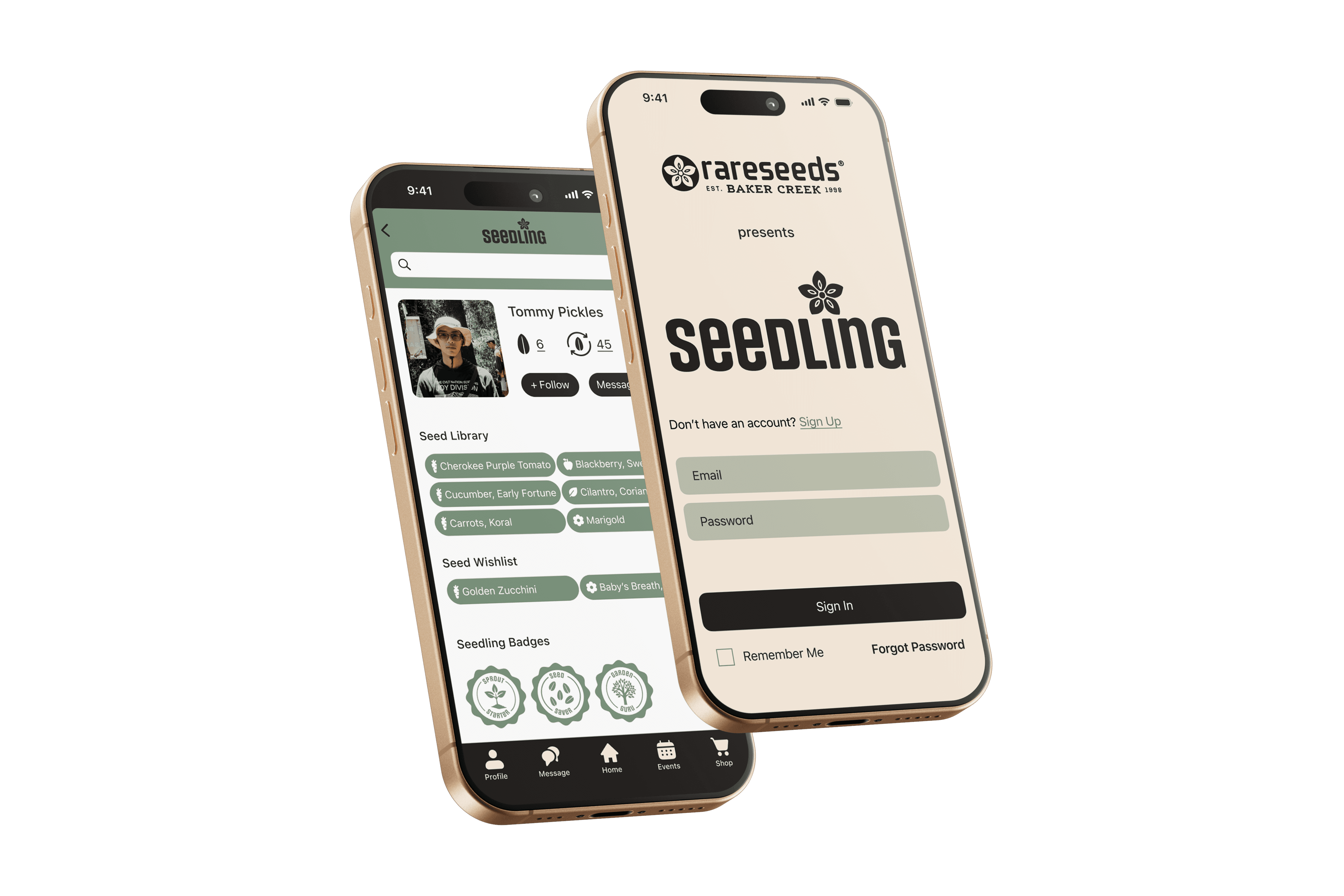
When designing the brand identity from the ground up, I started with the name: Seedling. It evokes growth and renewal, aligning perfectly with Rare Seeds' mission. For the visual system, I prioritized usability and accessibility. Neutral background tones created a clean interface that wouldn't overwhelm users. I used darker green for interactive elements to draw attention to clickable areas, and lighter green to highlight key sections and guide focus. Every color passed WCAG AA accessibility standards.


For the logo, I incorporated Rare Seeds' existing typeface to maintain brand continuity, then integrated their signature flower icon into the tittle of the "i" in "Seedling." It was a subtle connection that said, "This is part of the Rare Seeds family."

Rare Seeds Current Logo
Seedlings' Logo

The Final Design

The Final Design

The Final Design

App Features and Functions

App Features and Functions

App Features and Functions

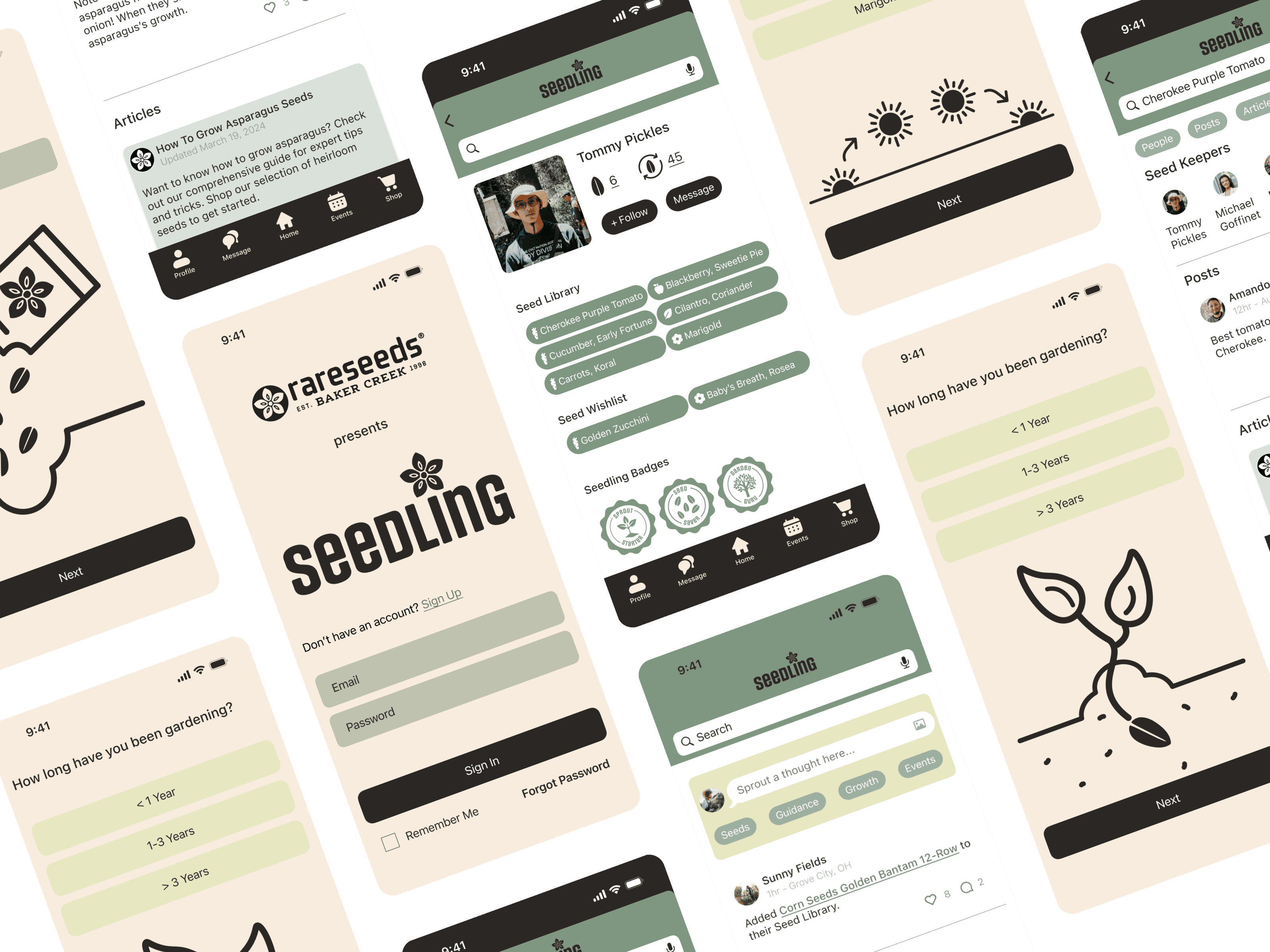
  • Onboarding: Gathers information about gardening experience and growing zone, then generates a personalized seed wishlist of heirloom varieties that will thrive in the user's environment.


  • Home Page: Immediate access to troubleshooting tips, community updates, and guidance from local gardeners.


  • Search Seeds: Connects users with local gardeners willing to share specific seed varieties. If unavailable locally, links directly to Rare Seeds' website for purchase.


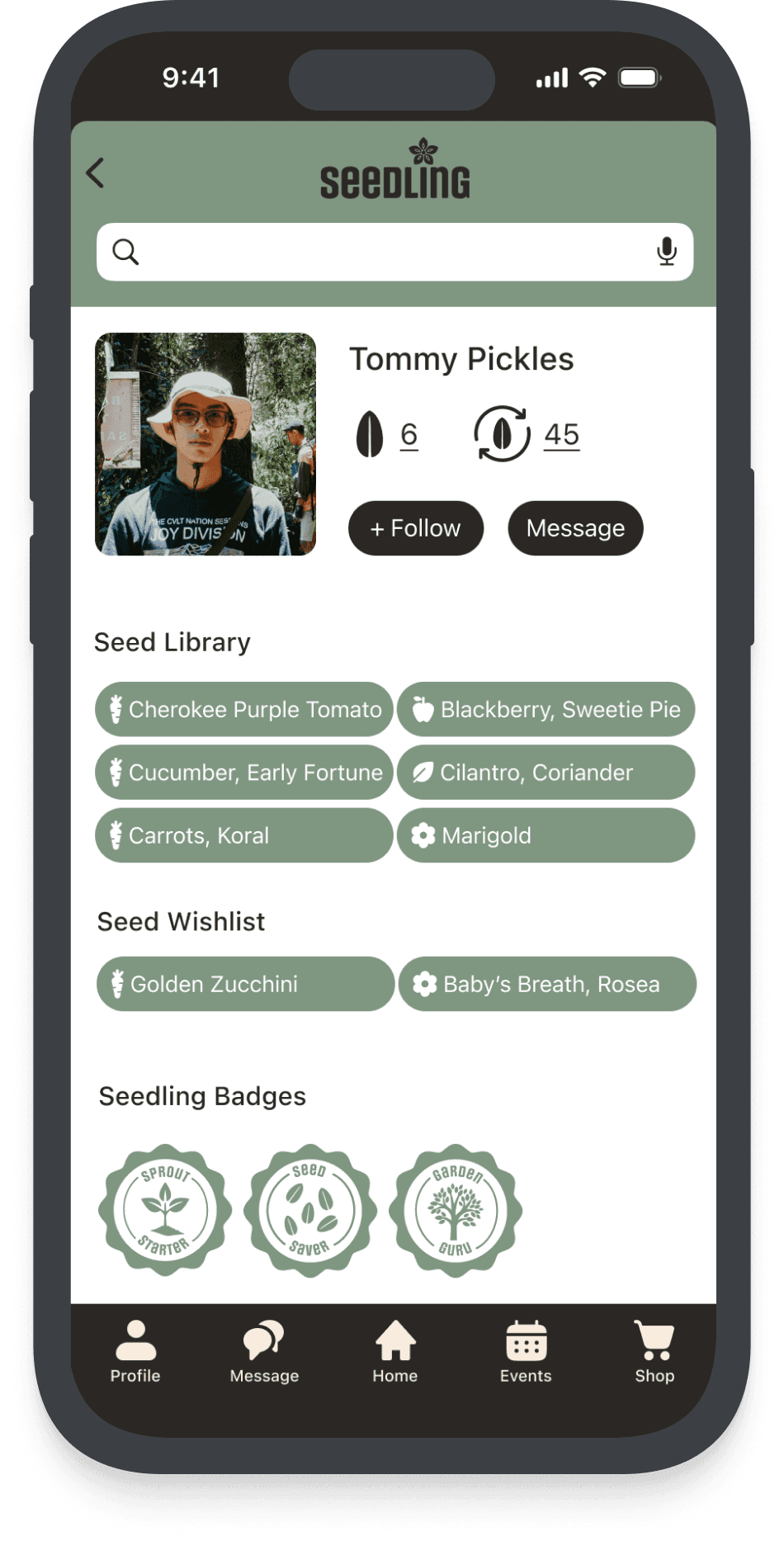
  • Profile: Showcases the seeds a user is searching for and those available for swapping.


  • Message Board: A space for users to share advice, troubleshoot issues, and coordinate seed exchanges.
The Impact

The Impact

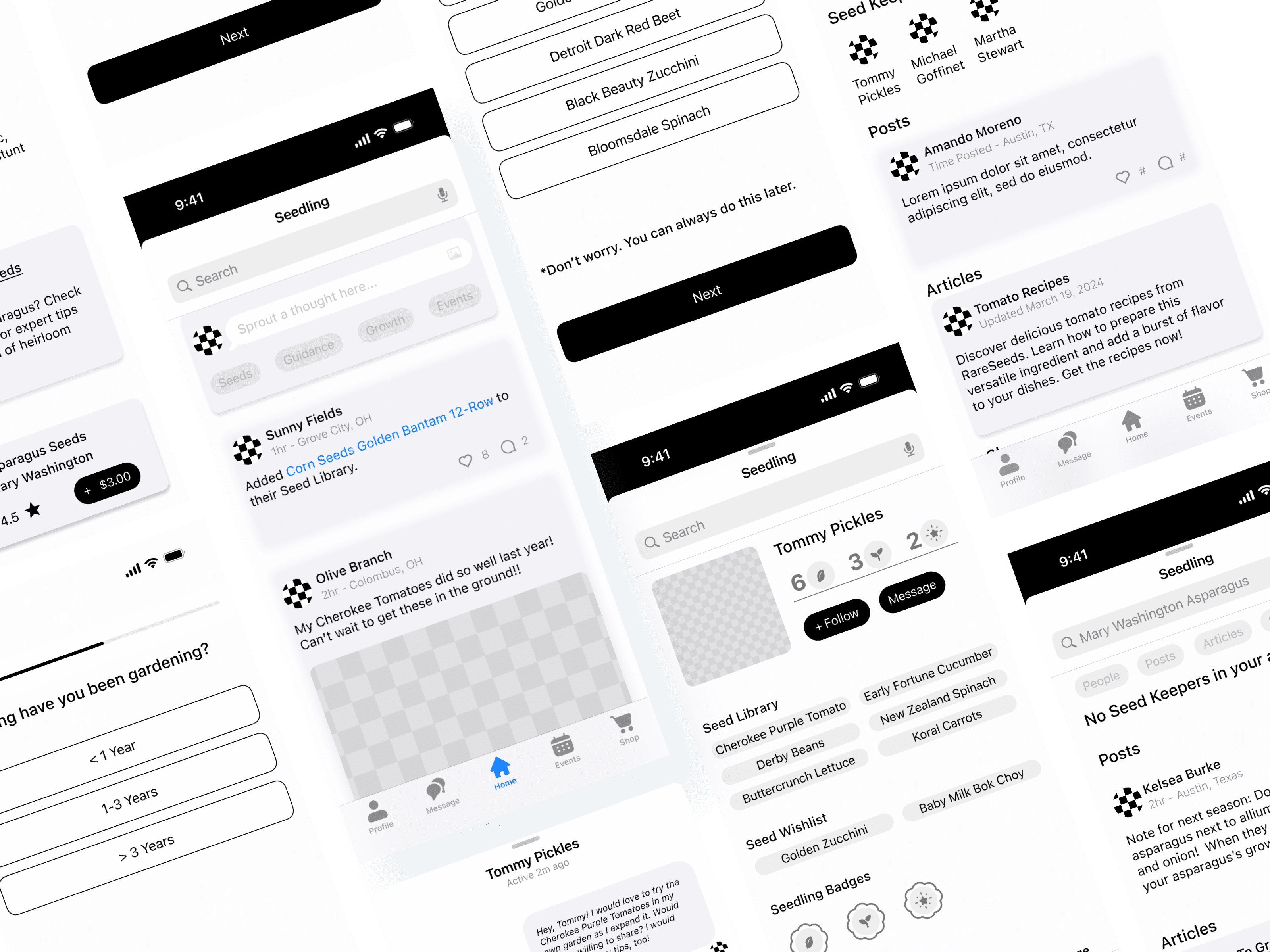
Successfully passed usability testing with 6 participants across lo-fi and hi-fi prototypes, with positive feedback on onboarding personalization, seed-matching functionality, and gamification elements. Testers responded positively to the focused seed-sharing concept, noting it felt more purposeful than generic gardening apps, and the brand identity struck the right balance between approachable and trustworthy. The prototype validated that Rare Seeds could differentiate in a crowded market by prioritizing community over commerce.

Successfully passed usability testing with 6 participants across lo-fi and hi-fi prototypes, with positive feedback on onboarding personalization, seed-matching functionality, and gamification elements. Testers responded positively to the focused seed-sharing concept, noting it felt more purposeful than generic gardening apps, and the brand identity struck the right balance between approachable and trustworthy. The prototype validated that Rare Seeds could differentiate in a crowded market by prioritizing community over commerce.

Lessons Learned

Lessons Learned

User research shaped a focused product vision. The depth of users' frustration with existing resources and their desire for hyper-localized guidance led us away from building a generic app toward something truly differentiated.

Strategic advocacy prevented feature bloat. When the team wanted to add Reddit-style forums and full social profiles, I advocated for keeping messaging focused on seed exchange coordination. By proposing the MoSCoW framework, we cut features that didn't directly support our core value proposition: localized seed sharing. This reinforced that design leadership isn't just about making things look good, it's about shaping product direction.

Data-driven decisions validated design choices. Researching urban gardener demographics and gamification preferences gave us confidence to incorporate features backed by behavioral research, not just intuition.

User research shaped a focused product vision. The depth of users' frustration with existing resources and their desire for hyper-localized guidance led us away from building a generic app toward something truly differentiated.

Strategic advocacy prevented feature bloat. When the team wanted to add Reddit-style forums and full social profiles, I advocated for keeping messaging focused on seed exchange coordination. By proposing the MoSCoW framework, we cut features that didn't directly support our core value proposition: localized seed sharing. This reinforced that design leadership isn't just about making things look good, it's about shaping product direction.

Data-driven decisions validated design choices. Researching urban gardener demographics and gamification preferences gave us confidence to incorporate features backed by behavioral research, not just intuition.